
The best hunting glasses pair a Z87+ impact rating with interchangeable tints for changing field light. Our four picks are the Wiley X Saint (MIL-PRF-32432A and Z87.1+), the foam-lined Wiley X Saber Advanced with a Grey, Light Rust and Vermillion kit, the polarized Wiley X Valor for waterfowl, and the Oakley Ballistic M Frame 3.0 (MIL-PRF-31013). Light rust or copper is the best all-around field tint.
Hunting is the one kind of shooting where the light is always working against you. You are out before the sun clears the ridge, or you are still in the stand when it slides behind the timber, and the buck steps clear in that gray half hour when your eyes are at their worst. A hunting lens has two jobs at the same moment. It has to stop a whipped branch or a kicked-up twig from reaching your eye while you push through cover, and it has to pull a brown animal off a brown background that spent a few million years learning to hide it. Get the frame right and you read the shot sooner, and you keep both eyes for next season.
What the field actually throws at your eyes
The range has its hazards covered in our range eyewear guide: spent brass, a ruptured primer, gas off a failed case head. The field trades those for a different set. You walk into low branches in the dark. You crawl a fencerow and catch a thorn. You glass a field in a crosswind that carries grit and chaff straight into your face. None of that cares whether your glasses are rated, so start with the one mark that means they were tested. You want Z87+ stamped on the frame, the high-velocity impact rating from the American National Standards Institute, where a quarter-inch steel ball is fired at the lens at 150 feet per second and nothing is allowed to reach the eye. We took the marking apart in our Z87.1 explainer if you want the two-minute version before you spend a dollar.
Above that sits the ballistic tier, the same one that matters at the range. Frames like the Wiley X Saint meet MIL-PRF-32432A and the Oakley Ballistic M Frame 3.0 meets MIL-PRF-31013, both tested against a high-speed fragment rather than a slow ball. You do not need a ballistic rating to sit a treestand. But the frames that carry it tend to be the ones built to take a beating in a pack, so the rating is a decent proxy for "this will survive the season." If you're weighing Wiley X against Oakley beyond just this pairing, our Wiley X vs Oakley comparison covers fit, seal, and lens options side by side.

Tint is the whole game out here
This is where hunting eyewear and range eyewear part ways. On a paper target you want crisp black on white. In the field you want a brown animal to separate from bark, leaf litter, and shadow, and you want it to happen in light that changes by the minute. A few tints do most of the work:
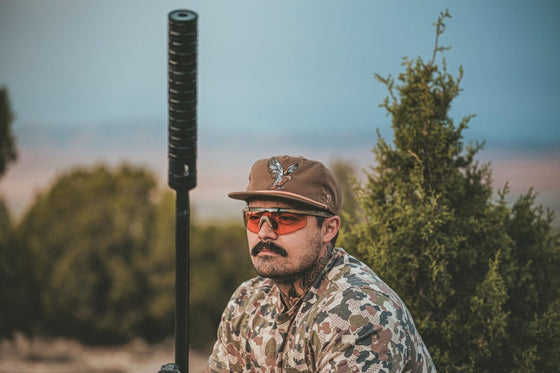
Light rust and copper are the do-everything field tints. They knock down the green and brown wash that flattens a scene and make edges pop, which is exactly what you need to catch a flicked ear or a shifting outline against timber. Vermillion goes a step further for heavy cover and overcast, lifting reds and browns hard off green. Yellow is the low-light choice for dawn, dusk, and gray-sky days, brightening a dim scene more than it sharpens it. Clear is for the walk in and the walk out, and for dense predawn timber where any tint just steals light you cannot spare. Smoke grey is for the open: a picked cornfield at midday, a prairie dog town, a dove field with the sun overhead.
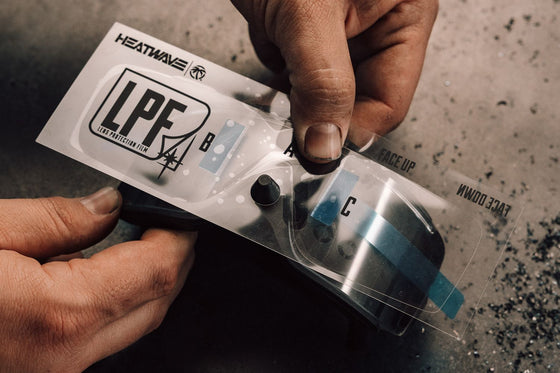
The honest answer to "which tint" is "more than one," which is why interchangeable kits beat a fixed lens for hunting. The Wiley X Saber Advanced ships in a three-lens kit with Grey, Light Rust, and Vermillion for around $84, foam-lined to seal out wind, and the lens swaps in the field without a tool. The Saint comes as a two-lens Smoke Grey and Clear kit near $103 so you can run dark in the open and clear for the timber.
The best hunting lens is the one that makes a brown animal stand off a brown background half a second sooner. Everything else is comfort.
Frames worth a spot in the pack
Four hold up across most hunting. The Wiley X Saint is a high-wrap frame on a small-to-medium face, MIL-PRF-32432A ballistic and Z87.1+, with rubber temples and nose pads that stay put when you are sweating up a ridge. The Saber Advanced is the lightweight, foam-lined pick for blinds and dusty fields, with the three-tint kit already in the box. For waterfowl and any time you are staring at glare off water or snow, the Wiley X Valor offers a polarized smoke option around $167 that cuts the shine without killing the rest of the scene.
The Oakley Ballistic M Frame 3.0 is the splurge at $175 and up, $197 for the Prizm TR22 and TR45 lenses tuned for exactly this kind of low-contrast field light. It runs 1.05 ounces with a permanent anti-fog coating and thin stems built to sit under ear protection and a helmet, which matters more than it sounds when you are wearing muffs in a blind. All four live in our shooting and range collection alongside the rest of the ballistic and Z87+ frames.
The things that ruin a sit
Fog is the quiet killer. Cold morning, warm face, and your glass is useless right when the woods wake up. A wraparound with vents and a foam gasket, like the Saber Advanced, breathes better than a flat lens pressed to your face, and a permanent anti-fog coating like the M Frame's beats the spray-on stuff that wears off by November. Wind is the other one. A high-wrap frame seals out the crosswind grit that makes your eyes water and blink at the worst time. And if you stack glasses under ear muffs, the thin temple on the M Frame 3.0 keeps the muff sealed instead of breaking it open with a thick arm. Small detail, long sit, big difference.
Common questions
Do I really need Z87 glasses to hunt?
No law requires it for recreational hunting the way OSHA requires it on a job site, but the hazards are real: branches in the dark, recoil bringing a scope toward your face, blowing field debris. A Z87+ frame costs about what a box of premium ammo does and protects the eyes you aim with. The American Academy of Ophthalmology backs impact-rated eyewear for shooting sports for the same reason.
What lens tint is best for hunting?
For most field hunting, light rust or copper is the single best all-around tint because it lifts a brown animal off a brown background. Add yellow for low-light dawn and dusk, clear for dense predawn timber, and smoke grey for open midday fields. A two- or three-lens kit covers all of it.
Are polarized lenses good for hunting?
It depends on the hunt. Polarized is excellent for waterfowl and anywhere you fight glare off water or snow, which is why the polarized Valor exists. In dry timber it offers less, and some hunters dislike the way polarization interacts with a riflescope or a phone screen, so it is a situational pick rather than a default.
Will anti-fog actually hold up on a cold morning?
A permanent factory coating like the one on the Oakley M Frame 3.0 holds far better than spray-on treatments, and a vented wraparound that lets air move across the lens helps more than any coating. The combination of the two is what keeps you glassing when your breath is showing.
If you hunt in changing light, the move is one tough frame and a kit of lenses you can swap for the morning, the timber, and the open field. Start with the shooting and range collection and pick the frame that fits your face first, then the tints that fit your country.