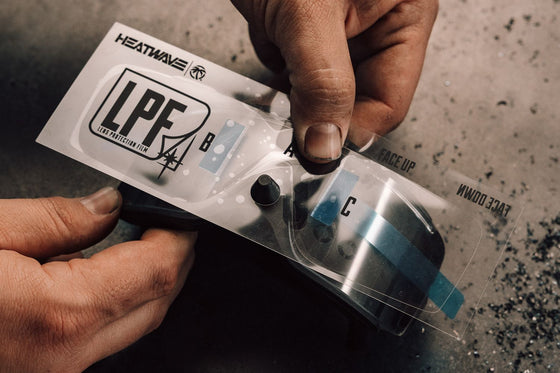

For the range, wear eyewear stamped Z87+, meaning it passed the ANSI Z87.1 high-velocity impact test, and step up to a ballistic frame such as the MIL-PRF-32432 rated Wiley X Saint or Valor, or the Oakley Ballistic M Frame 3.0, for more protection. Then match the tint: light rust, vermillion or rose for most outdoor targets, yellow for low light, and clear indoors.
The range safety officer makes you wear eye protection for a concrete reason. Spent brass kicks sideways off the bench next to you. A primer can rupture. On a bad day a case head fails and sends gas and metal straight back toward the firing line. Glasses are the last barrier between hot debris and the part of you that does the aiming.
That is the first job. The second is quieter and just as important: a shooting lens has to make the target easier to see than your bare eyes do. Get both right and you shoot better and safer at once. Get the tint wrong and you will fight the background all day.
Z87+ is the floor, ballistic is the ceiling
Every pair worth wearing on a firing line starts with one mark stamped into the frame: Z87+. That plus sign means the eyewear passed the high-velocity impact test in the American National Standards Institute's ANSI Z87.1 standard, where a quarter-inch steel ball is fired at the lens at 150 feet per second and nothing is allowed to reach the eye. A plain Z87 without the plus is rated for impact but not the high-velocity version, so for shooting you want the plus sign. We pulled apart exactly what each part of the marking means in our Z87.1 explainer, and it is worth two minutes before you spend a dollar.
Above Z87+ sits a separate, harder standard. The military spec MIL-PRF-32432 tests eyewear against a small high-speed fragment rather than a blunt ball, and it is the rating that special operations and law enforcement units actually issue. You do not strictly need a ballistic frame to punch paper on a Saturday, but the frames that carry it are usually built for real abuse, and the price gap is smaller than most people expect.
Wiley X: the ballistic workhorse
If one brand owns the range, it is Wiley X. Every pair in the line meets or exceeds Z87.1+, and a long list of them are MIL-PRF-32432 ballistic rated, so you are not choosing between protection levels. You are choosing a shape.
The WX Saint is the one we steer most new shooters toward. It runs shatterproof Selenite polycarbonate lenses that meet the MIL-PRF-32432 ballistic standard, it ships as a kit with multiple interchangeable lenses, and the swap takes seconds at the bench. The WX Valor is the semi-rimless option, rated to MIL-PRF-32432A, with rubber-tipped temples that bite into the skin a little so the glasses do not walk down your nose under recoil. The WX Saber Advanced and WX Guard Advanced are the purpose-built shooting frames, sold as changeable-lens shooting and hunting glasses that typically ship with a grey or smoke lens, a clear lens, and a light rust lens.
That light rust lens is the one people sleep on. It is a contrast tint, and it is the reason a Wiley X kit is worth more than a single fixed-lens pair. More on what it does below. The full range we carry sits in the Wiley X collection, and if you want the model-by-model rundown across the whole line, not only the shooting frames, that lives in our Wiley X buyer's guide.
Oakley Standard Issue: the M Frame
Oakley's range and duty eyewear is sold under the Standard Issue name, and the frame that matters here is the Ballistic M Frame 3.0. It is a single-lens shield with a wide, uninterrupted field of view, which is exactly what you want when you are tracking a moving clay and do not want a frame rim cutting across the bird. The lens is Oakley's Plutonite, the frame is their chemical-resistant O-Matter, and the nosepads are Unobtainium, the rubber that grips harder as it gets wet with sweat. It surpasses Z87.1 for high-mass and high-velocity impact and carries Oakley's ballistic rating on top of that.
The tradeoff is versatility. A single-shield M Frame is glorious on a flat range and less practical if you also want one pair for the worksite and the truck. Oakley's wrap shapes, like the Flak and Fuel Cell in the Standard Issue catalog, split the difference, though not all carry the ballistic rating, so check the spec. The full picture is in our Oakley Standard Issue guide, and current stock is in the Oakley collection.
The frame stops the debris. The tint wins the match. Most shooters buy the first and ignore the second, then wonder why the targets keep hiding in the trees.
Wiley X or Oakley: how to actually choose
They overlap more than the brand loyalists admit, so decide on shape and lens system rather than the logo. Go Wiley X if you want a changeable-lens kit out of the box and a frame that seals a little closer to the face, which helps in wind and blowing dust. Go with the Oakley M Frame if you want the widest unbroken sightline and you already trust Plutonite optics from their sunglasses. If you wear a prescription, both brands cut Rx into many of these frames, so that does not force the decision either way.

Lens tints that pull the target off the background
This is where shooting eyewear stops being generic safety glasses. The job of a shooting tint is contrast: making an orange clay jump forward while the trees, sky, and berm fall back.
Light rust, vermillion, and rose are the workhorse target tints. They knock down the greens and blues of a natural background so an orange clay reads almost neon against the field. If you buy one extra lens, buy this one. Yellow and high-contrast amber brighten a flat, overcast morning and earn their place on low-light and indoor ranges. Smoke and grey are for bright open sun, when you want true color and glare control more than contrast. Clear belongs indoors and at dusk, when you only need the impact protection.
Range shooters who also fish or drive a lot ask about polarization. It kills glare off water and hoods, but it can wash out some digital displays and interfere with reading mirage at distance, so treat it as a personal call. We went deep on the upsides in the polarized guide.
Common questions
What do Z87+ and ballistic ratings mean on shooting glasses?
Z87+ means the eyewear passed the ANSI Z87.1 high-velocity impact test, where a quarter-inch steel ball is fired at the lens at 150 feet per second. Ballistic ratings like MIL-PRF-32432 go further, testing against a small high-speed fragment, and they are the standard issued to military and law enforcement. For range use, treat Z87+ as the minimum and ballistic as the upgrade.
What lens color is best for shooting?
For orange clays and most outdoor targets, a contrast tint such as light rust, vermillion, or rose makes the target pop off green and blue backgrounds. Yellow helps in low light and overcast conditions, smoke or grey suits bright open sun, and clear is right for indoor ranges. A changeable-lens kit covers all of it.
Are Wiley X or Oakley better for the range?
Both meet or exceed Z87+ and offer ballistic-rated frames. Wiley X leads on out-of-the-box changeable-lens kits and a closer facial seal. Oakley's Ballistic M Frame 3.0 leads on an unbroken wide sightline and Plutonite optics. Pick the shape and lens system that fit your face and the way you shoot.
Can I get shooting safety glasses in my prescription?
Yes. Both Wiley X and Oakley Standard Issue offer prescription options on many frames, so you keep the Z87+ rating and the correct lens at the same time instead of stacking readers behind a pair of safety glasses.
Do I really need eye protection at an outdoor range?
Yes. Ejected brass, ruptured primers, and the occasional case-head failure all send debris back toward the firing line, which is why ranges require eye protection outdoors too.
Set up for the range in the right order. Frame rating first, then the lens kit, then the tint matched to the light you actually shoot in. Our shooting and range collection gathers the Wiley X and Oakley frames built for exactly this, ballistic options included, so you can buy once and see the target in any light.