
Landscaping crews should wear Z87+ (high-impact) wraparound safety glasses with UV-400 lenses and a genuine anti-fog coating, because trimmers and blowers throw debris from every direction through a long day in the sun. Heat Wave Visual's Future Tech is the most versatile pick, since its Z87+ photochromic lens covers full sun, shade and the truck cab in one pair.
Landscaping puts your eyes through a full shift of punishment. Mulch and bark chips come off a blower fast enough to do real damage. String trimmers kick back gravel, wire, and debris. Branches snap back with no warning. And then there are eight to ten hours of direct UV exposure, the kind of sustained sun load that most trades never see. The glasses most landscape crews actually wear are either cheap non-rated sunglasses or nothing at all, because Z87-rated frames have a reputation for being uncomfortable, ugly, or both. That reputation is a few years out of date.
What the outdoor work environment actually demands
The landscape site is not like a shop floor. There is no fixed hazard zone, no machine to stand back from, no overhead shield. Debris comes from every direction and the source changes by the minute. That means wrap-around lens coverage matters more than it does indoors, and the rating you want is Z87+ (high-impact) not just Z87 (basic impact). High-impact means the lens survived a steel ball at 150 feet per second; for flying debris from a trimmer, that is the right floor.
ANSI Z87.1 says nothing about UV protection as a Z87 requirement. A Z87+ lens could be perfectly clear and block no UV at all. For outdoor work, you want lenses rated UV-400, and for extended sun exposure a tinted or mirrored lens cuts eye fatigue significantly over an eight-hour day.
Anti-fog matters more than most manufacturers advertise. Physical labor means body heat, and sweat on the face creates a microclimate inside any lens. A coating that is genuinely anti-fog, not just marketed as fog-resistant, is worth paying for on a site where you are moving all shift.
The lens colors that matter most
Gray and smoke-tinted lenses do the least color distortion in direct sunlight. What you see is what is there, just dimmer. That matters when you are reading terrain, working close to vehicle paths, or communicating hand signals across a site.
Brown and amber lenses add contrast, making the edge of a shadow sharper. If you are pruning or trimming near structures and constantly moving between sun and shade, amber is the lens that keeps your eyes from spending all day adjusting.
Clear lenses stay relevant on landscape sites because the UV load at dawn, dusk, and under tree canopy does not justify dark tint, but something is still hitting your eyes from trimmers and blowers. The best solution for variable-light conditions is a photochromic lens that goes clear indoors and dark in full sun. Heat Wave Visual's Future Tech uses a photochromic lens that is Z87+ rated, which almost no competitor at that price point matches.

Heat Wave Visual: built for outdoor work
Heat Wave Visual started making frames for the outdoor trades and motorsports world. They were among the first brands to bring genuine lifestyle styling to Z87+ frames. For landscaping specifically, the Lazer Face and Future Tech models earn the most use.
The Lazer Face is a wide wraparound with a low-profile frame that does not restrict peripheral vision. If you are constantly looking left and right to manage a crew or operate equipment near a road, that clearance matters. It comes in multiple tinted and mirrored lens options, including polarized, and carries a Z87 rating on every lens, with Z87+ once Heat Wave's add-on side shields are fitted.
The Future Tech earns the most versatility points because of the photochromic option. Crew supervisors who move between sun and shade, job trailers, and vehicle cabs all day do not want to carry two pairs. One Z87+ photochromic pair handles the whole shift.
The Vise and XL Vise are Heat Wave's wider-fit frames, designed for broader faces and wider temple spans. If your crew has complained that wraparounds pinch or slide, the XL Vise is usually the fix. All of these are in the Heat Wave Visual collection.
For an eight-hour outdoor shift, anti-fog and tint matter more than aesthetics. There is no longer a reason to choose between them.
Polarized vs non-polarized for landscape work
Polarized lenses cut scattered glare off horizontal surfaces: asphalt, standing water, concrete pavers. For crews who work parking lots, pool installs, or driveway work, polarized makes a real difference in eye fatigue by end of day. For pure groundskeeping in grass and trees, polarized helps less than people expect. The call is simpler than it sounds: if you spend significant time working around flat hard surfaces, get polarized. If you are mostly in vegetation, a good tinted lens is enough.
Heat Wave Visual, Wiley X, and Spy Optic all make Z87+ polarized frames at crew-friendly prices. Our guide to polarized safety glasses for outdoor work covers the full range if that is your first priority.
What to look for when buying for a crew
A Z87+ frame that fits different face sizes without requiring a custom fit for each person. A replacement cost that makes sense, because glasses on a landscape site get lost, scratched, and sat on. Under $40 per pair, Z87+ rated, with a lens tint that works in full sun covers most needs.
Order in two or three frame sizes if your crew has variable face widths. Make clear to leads that the rating matters: a non-rated sun lens from a convenience store provides no actual impact protection, only UV tint. An anti-fog lens on a crew that sweats all day is not a luxury; it is the difference between glasses worn all shift and glasses folded on a shirt pocket.
For volume pricing or a managed safety eyewear program, our corporate safety eyewear program supports recurring crew orders. The guide to safety glasses for utility and line crews also covers fit, lens, and certification considerations that apply equally to landscape crews.
Shop the lineup


Common questions
Do I need Z87 or Z87+ for landscaping work?
Z87+ for anything involving trimmers, blowers, or brush cutting. The plus rating means the lens survived a higher-velocity impact test than standard Z87. String trimmers and mowers generate debris at levels the basic Z87 test was not designed for.
Are tinted safety glasses UV-safe?
Not automatically. Tint alone does not block UV. Dark tint without UV filtering can actually make things worse because your pupils dilate behind a dark lens. Look for UV-400 on the spec sheet. Every lens sold on ChaosRXOptics includes UV-400 protection, but it is worth asking that question of any glasses you buy elsewhere.
What are the most fog-resistant safety glasses for summer work?
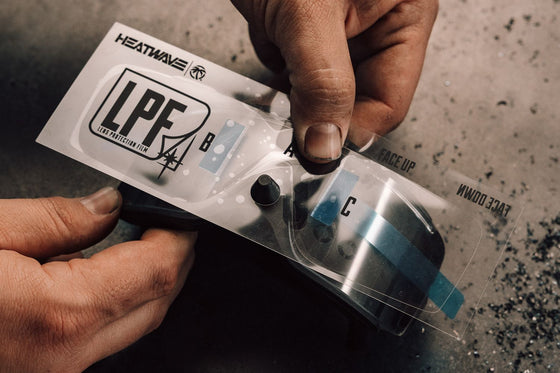
Heat Wave Visual's TD2 anti-fog coating and Wiley X's Selenite polycarbonate both perform well in field conditions. Wraparound coverage also helps: a closer lens-to-face fit limits the airflow gap that carries warm body heat onto the lens interior.
Can I get prescription lenses in a Z87+ frame?
Yes. Options include direct Rx frames and insert systems that fit inside a Z87+ shell. Our prescription safety glasses guide covers both, including lead times and cost. Most orders run one to two weeks.
Should the whole crew wear the same frame?
Not necessarily. Standardizing on a brand and ordering two or three of their most popular models gives you Z87+ compliance without forcing a fit that does not work for everyone. For Heat Wave Visual model-by-model specs, the Heat Wave Visual buyer's guide breaks down each frame by face type and use case.
Landscaping crews log more hours in direct sun and debris exposure than nearly any other trade. The glasses that get worn all shift, not stuffed in a pocket when no one's looking, are the ones that fit, do not fog, and look like something worth wearing. Browse the full Z87 safety sunglasses collection to find the right frames for your site and your crew.